Nursing homes, residential care and disability care
Legionella in your care home: every resident room that stands empty flushed, with time, name and result in one logbook.
A tag per room, the circulation pipe per wing monitored, and the report for the inspector with one click. The price follows the number of rooms, as for a hotel.
Your situation
What makes a care home difficult
Vulnerable residents, rooms that stand empty and long pipes. That is where the risks are.
A room that stands empty after someone leaves
Between two residents the shower sometimes stands still for weeks. Every room gets a tag; if it is empty, it goes on the flushing list and the ward sees it on the phone.
A circulation pipe per wing
The sensor monitors whether the loop stays at temperature, and you get an alert if it drops. A tap records the flush per tap with time and name, without evidence per tap.
Bathrooms, kitchens and staff showers
The shared rooms of a ward each get their tags and are in the walking route per ward.
Changing care staff
Whoever cleans the room taps with their own phone and the flushing password of the site. No account, with their name on every flush. No resident names in the system.
How it works
Four steps, one line in the logbook
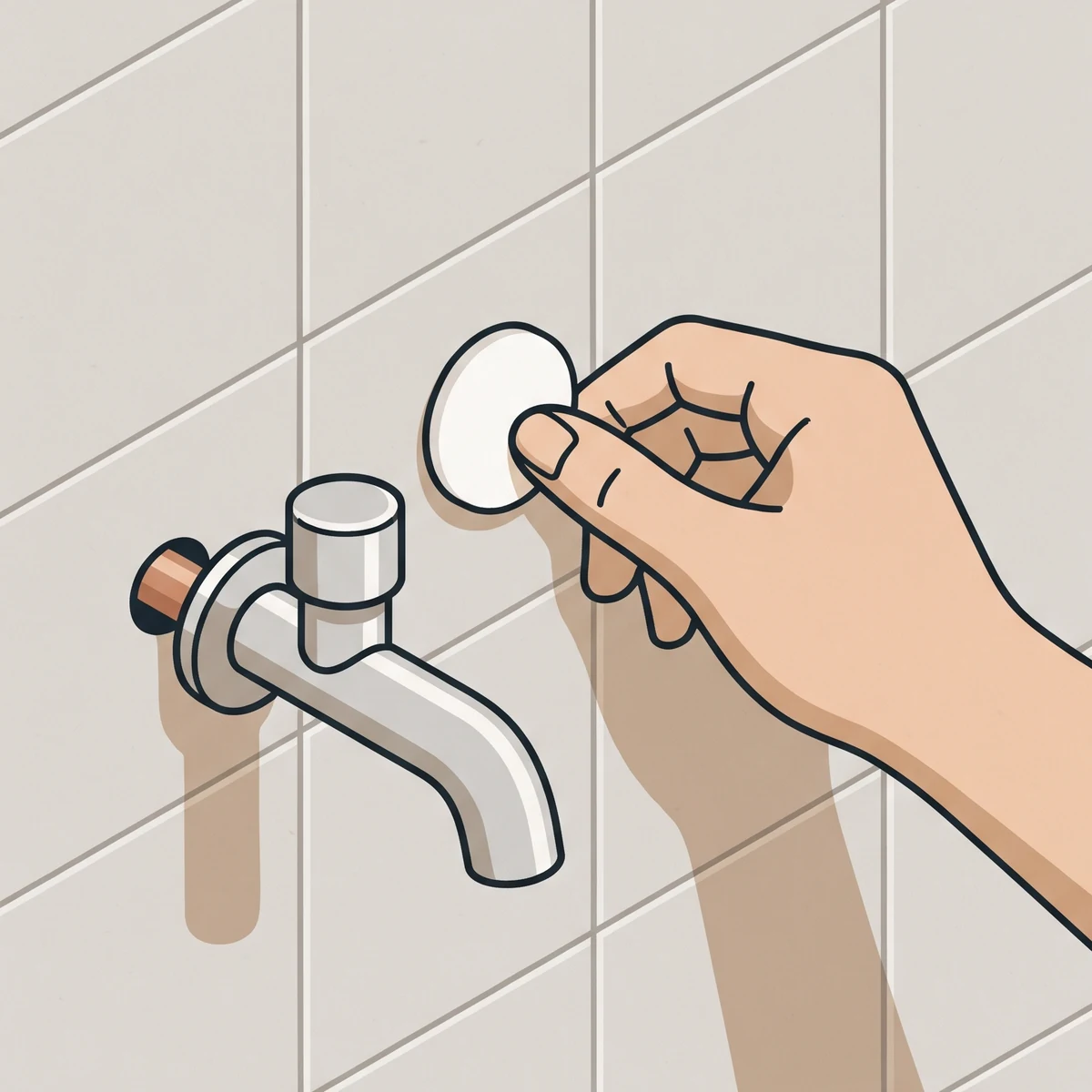
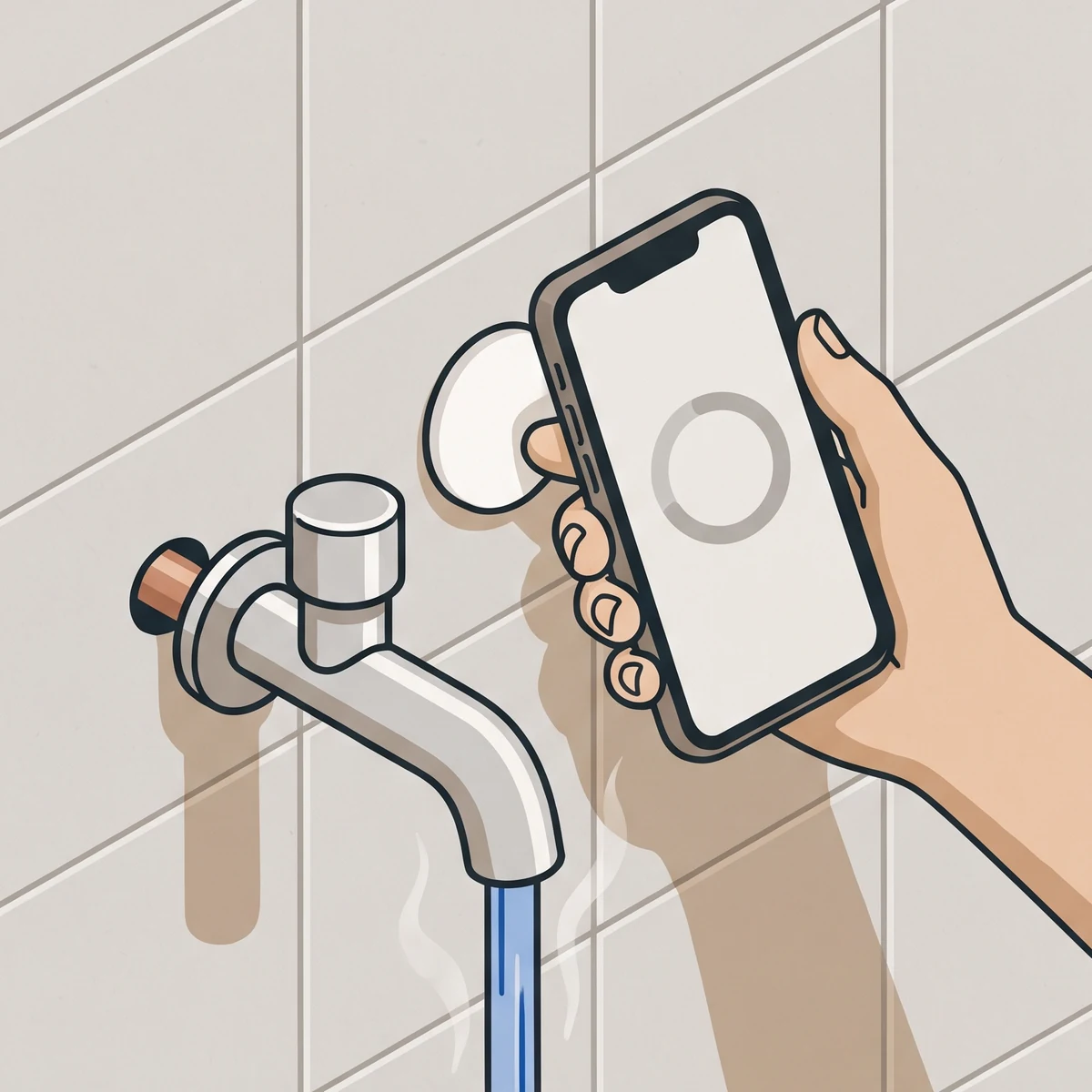
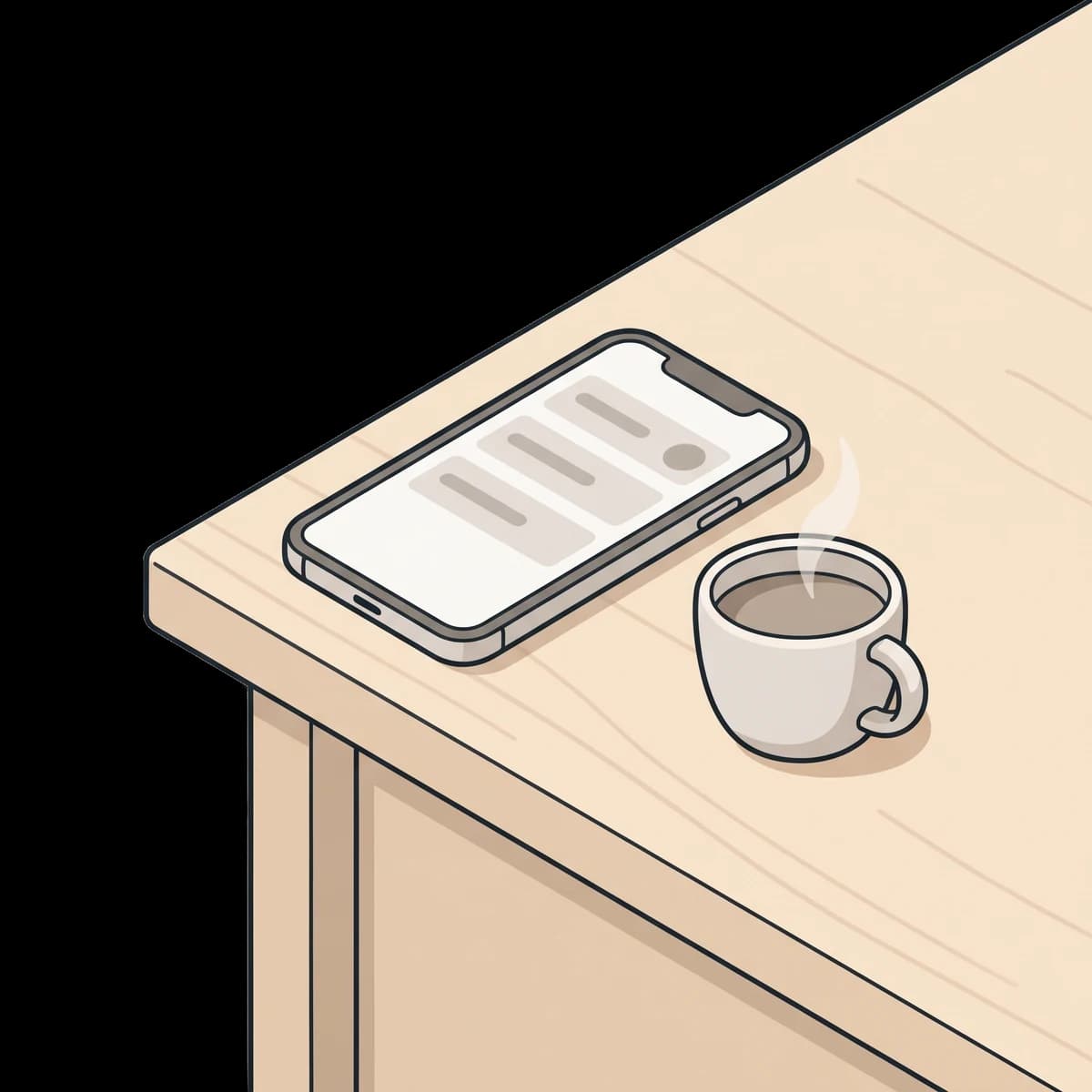
- 1
A tag at the tap
At every tap in the flushing round you stick a tag on the tile, like at shower room 12 in ward 2. One labelled bag per building; at the first tap you tell the app which tap it is.
- 2
Phone against the tag
Whoever flushes holds the phone against the tag and opens the tap. A timer on the screen counts down the flushing time of your site, one minute by default.
- 3
The sensor monitors the loop
With a circulation pipe the sensor measures every 15 minutes whether the loop stays at temperature. The loop does not change when a tap opens; the tap records the flush with time and name.
- 4
The line is in the logbook
Half an hour after the last tap the round closes. For each tap there is the time, the name and the result; if no hot water came, that is in it too, with an alert.
What you see
Three screens from the app
With made-up data, as it will look for you.
The loop at a glance
The course of the day for each sensor. With a circulation pipe you see that the loop stays at temperature; the tap itself is in the logbook.
The line in the logbook
Every flush with time, name and result. Nothing can be changed afterwards; a correction is a new line.
The report
Key figures, findings and the results per flushing point, for the period the inspector asks for.
Everything it does
What is in it now
Price per room
The subscription follows the number of resident rooms with their own shower, in three bands. The kit follows the number of buildings, with a tag per room.
Room overview per ward
Per ward a tile per room: green, orange or red. An occupied room counts as through-flow; an empty room goes on the list after a few days.
Flushing without an account
Staff tap with their own phone and the flushing password of the site. Their name is on every flush, and they do not need an account.
Alerts
A temperature outside the norm (after 3 readings in a row) or a flushing round that is not done gives an alert in the app and an email to whoever is responsible on site.
Report with one click
PDF, Excel or CSV over a period of your choice, and a share link for the inspector that works for 24 hours.
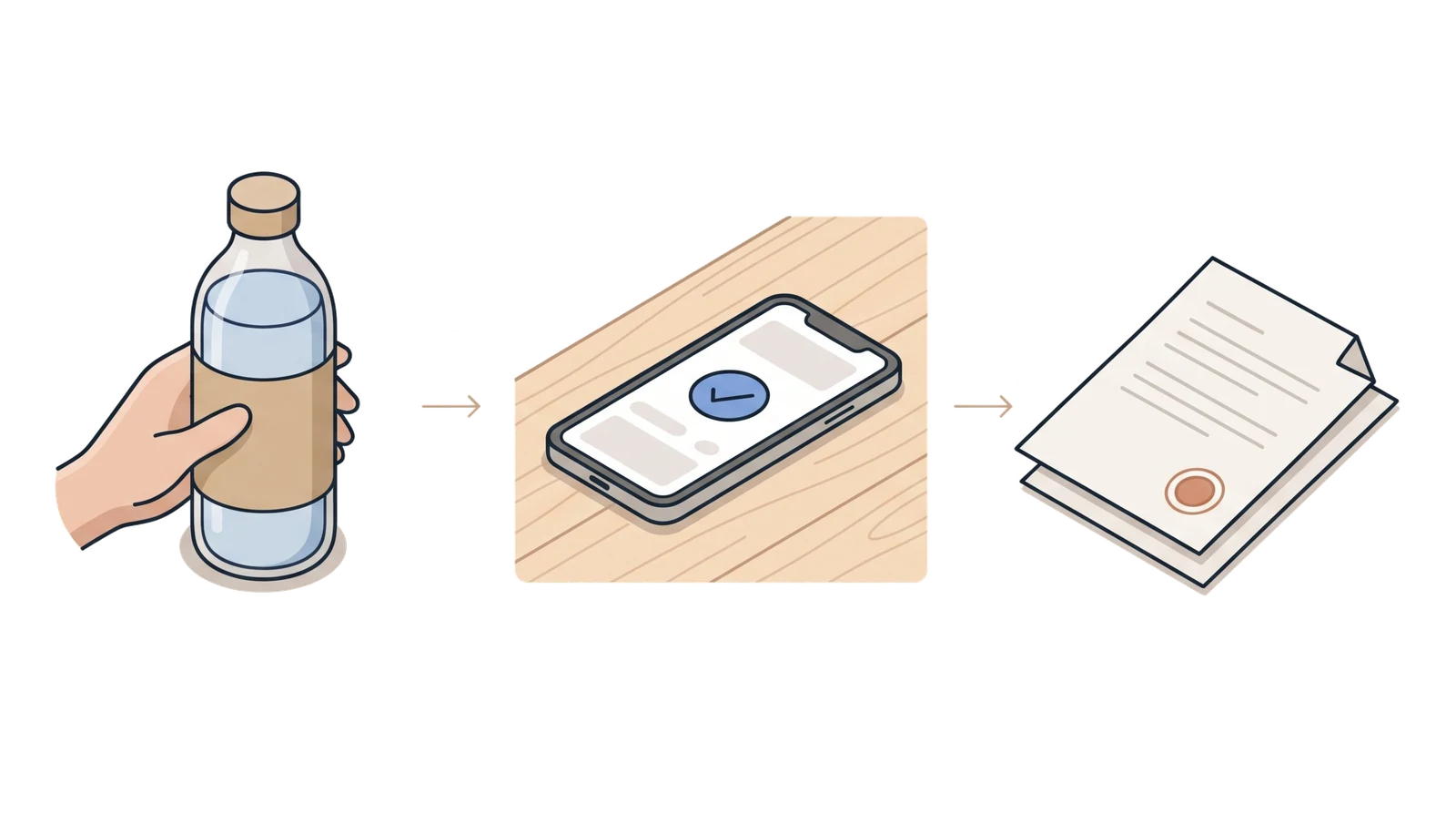
The laboratory still takes the samples
The laboratory results, the risk assessment and the water safety plan go into the same file as the logbook.
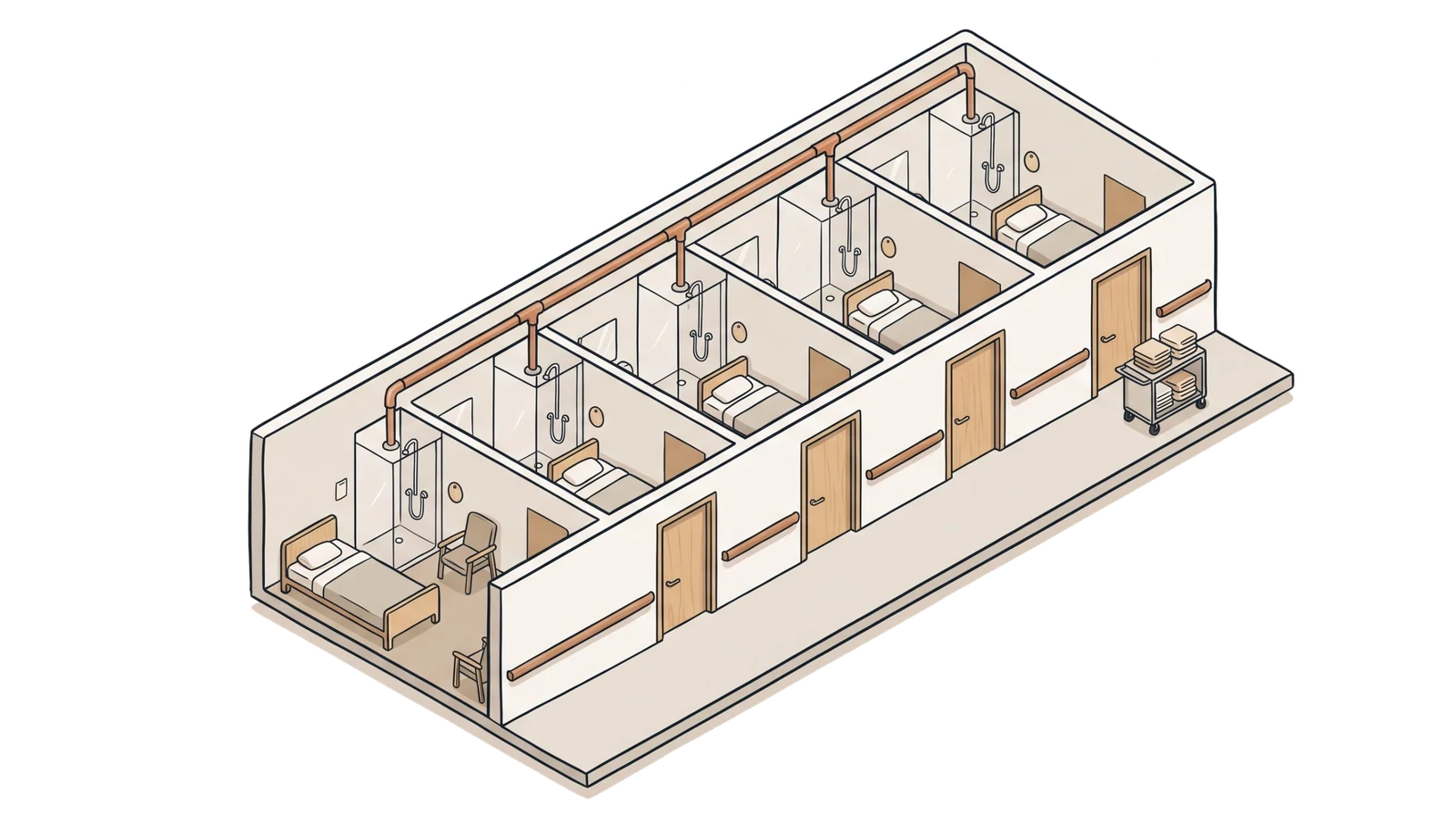
Who puts it up
Your maintenance team, in half an hour per wing
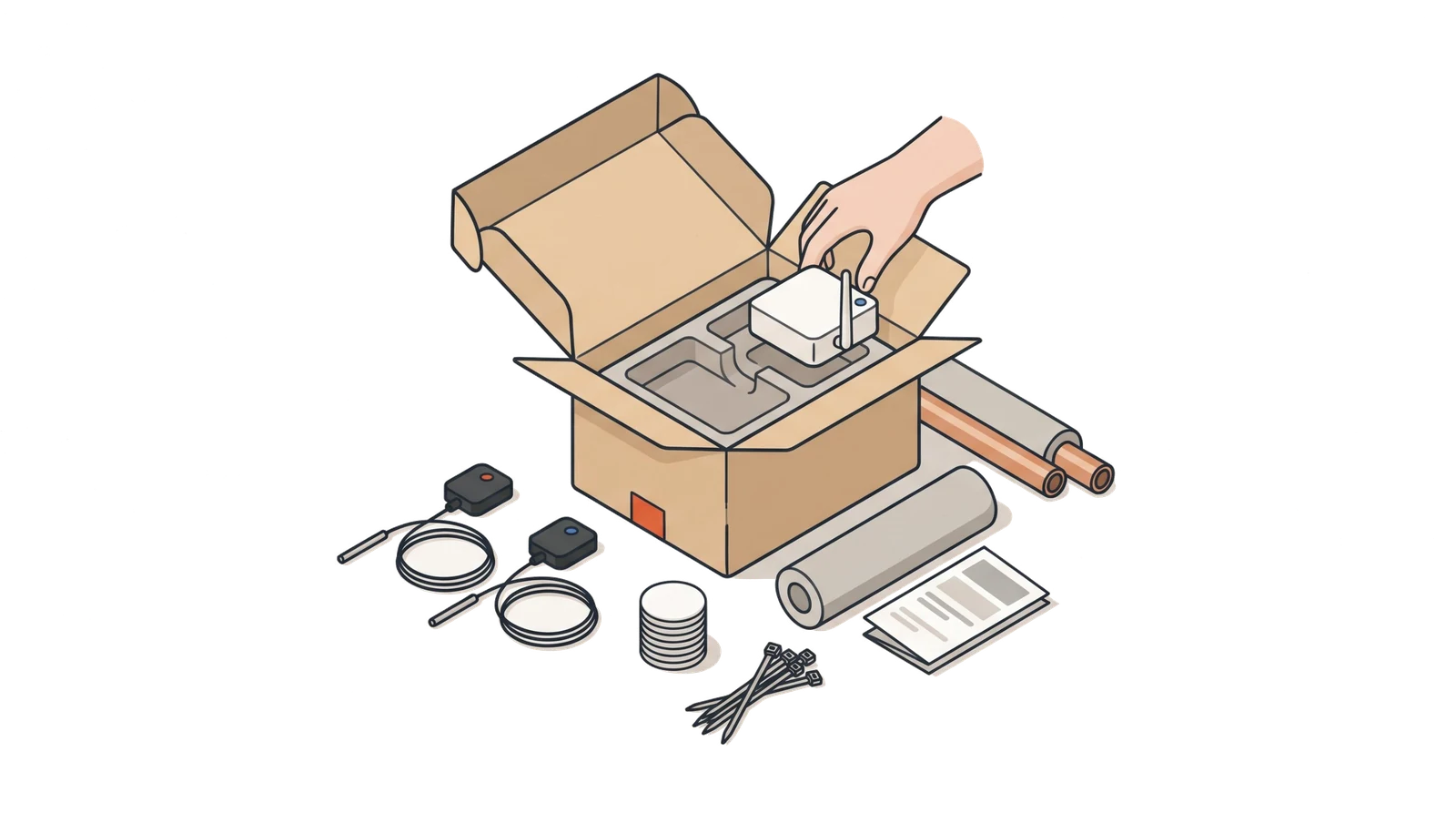
The sensor goes on the circulation pipe at the boiler; with more wings with their own loop, more sensors. You plug the gateway in at reception; you stick the tags on the tile next to the shower in every room.
The laboratory still takes the samples
We record the flushing in between. The laboratory results, the risk assessment and the water safety plan go into the same file.
Price
Per room, in three bands
- Up to 15 rooms: €39 per month, plus the kit one-off.
- 16 to 40 rooms: €59 per month, plus the kit one-off.
- 41 to 80 rooms: €89 per month, plus the kit one-off.
All prices exclude VAT. Above the highest band, a quotation to measure.
Request a pilot or a callSee first how it works on your ward?
Ask us for a pilot or a call. The subscription follows the number of resident rooms.
Contact
Rather talk first?
Leave your details and we will contact you within two working days about the kit that suits your care home.