Primary schools, secondary schools and school boards
Legionella at school: after every holiday the classrooms and changing rooms flushed, with time, name and result in one logbook.
A tag at every tap, a sensor on the central water heater, and the planning follows your school holidays. The caretaker taps with their own phone.
Your situation
What makes a school difficult
Many taps that run every day in term time, and then weeks with nobody. Exactly those holidays are the risk.
Twelve classrooms with a tap
Every tap in a classroom gets a tag. In term time they run by themselves; in the holidays they stand still and go into the flushing round.
The changing rooms of the gym
Showers that only run after PE, and not for weeks in summer. Every shower gets a tag, per changing room in its own bag.
School holidays as periods
You enter your school holidays as periods. Then the app knows the classrooms are empty and puts the taps in the weekly round.
Point-of-use heaters in the classrooms
A small heater under the washbasin gets no sensor; those flushes are recorded with the flushing timer. The sensor goes on the central water heater, if there is one.
How it works
Four steps, one line in the logbook

- 1
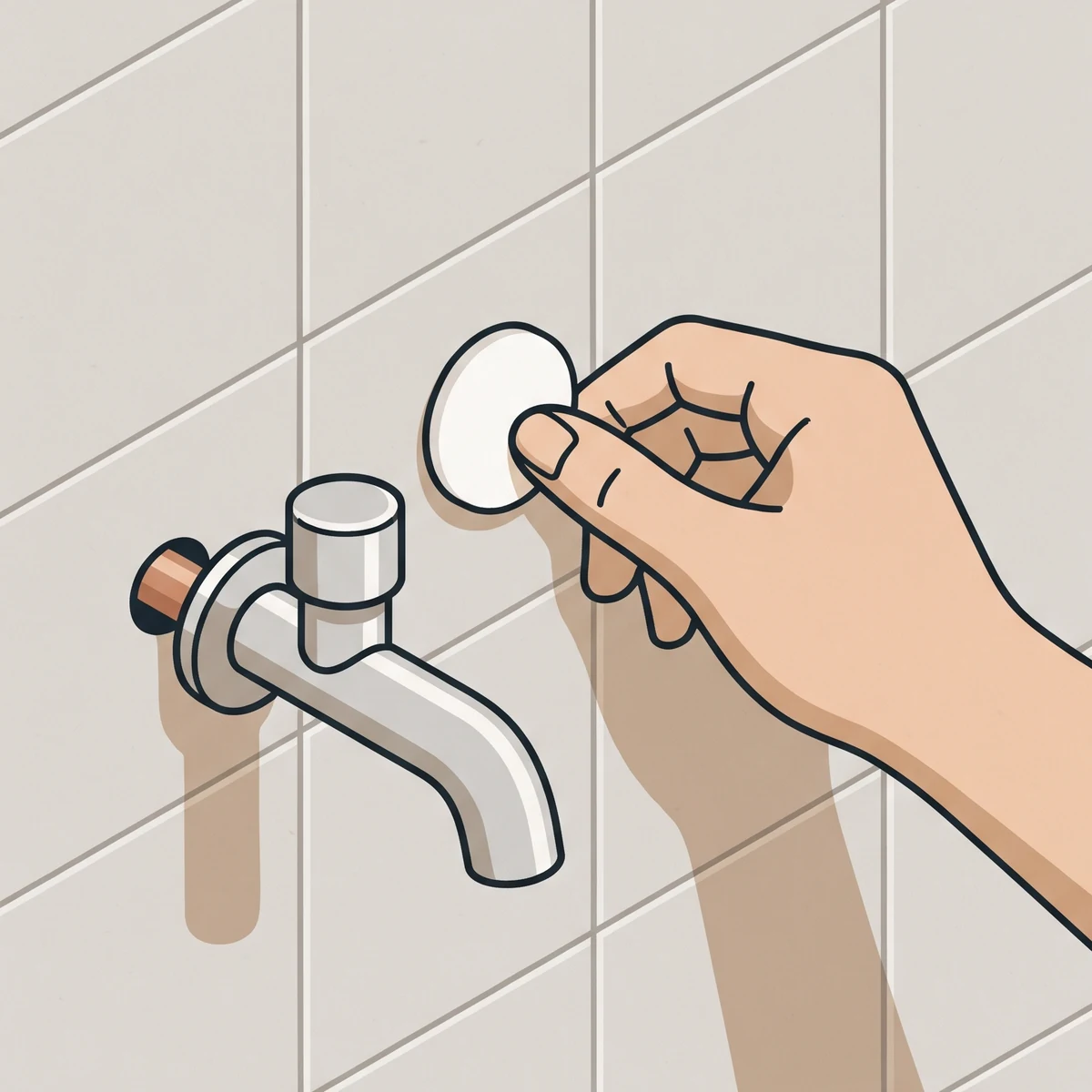
A tag at the tap
At every tap in the flushing round you stick a tag on the tile, like at shower changing room 2 in the gym. One labelled bag per building; at the first tap you tell the app which tap it is.
- 2
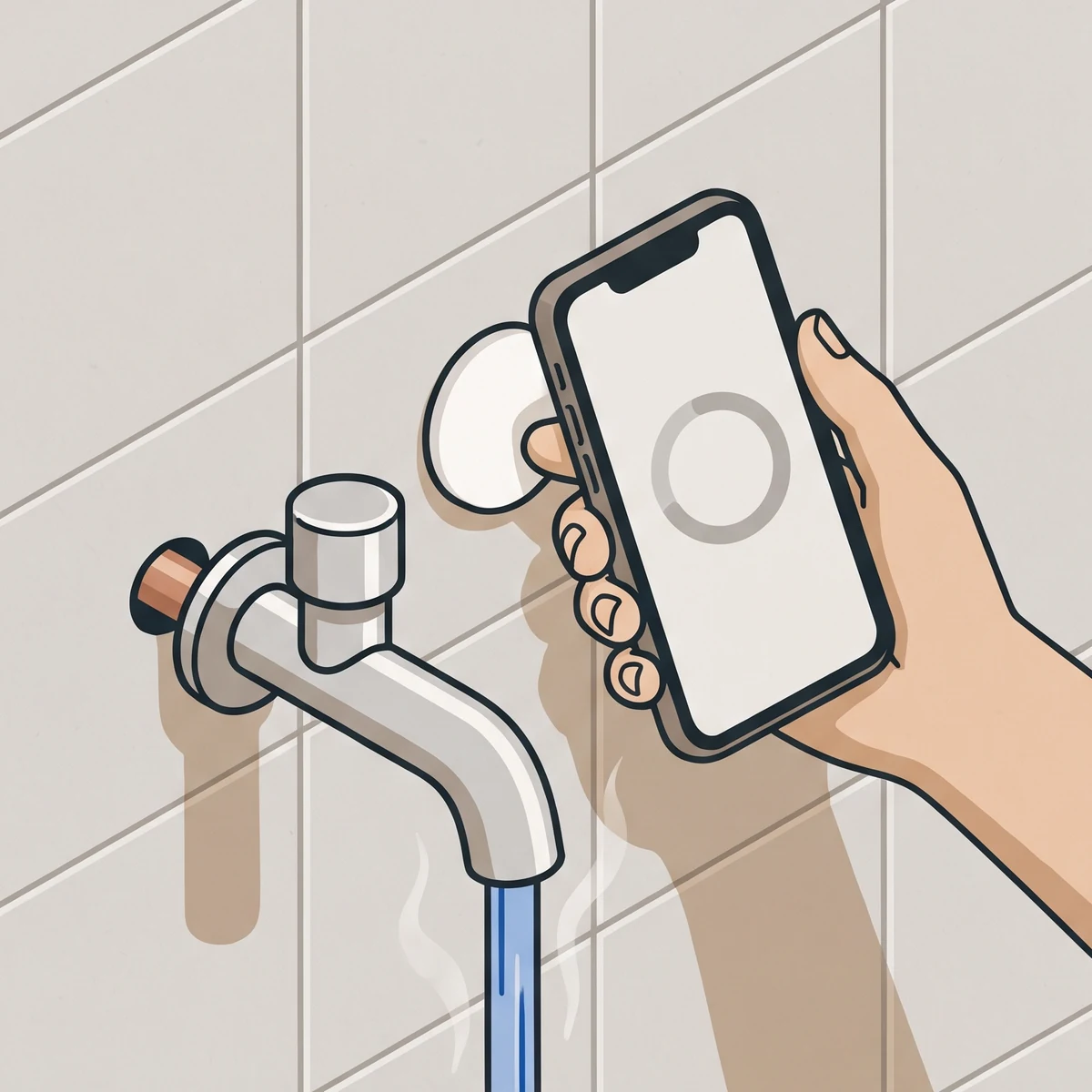
Phone against the tag
Whoever flushes holds the phone against the tag and opens the tap. A timer on the screen counts down the flushing time of your site, one minute by default.
- 3
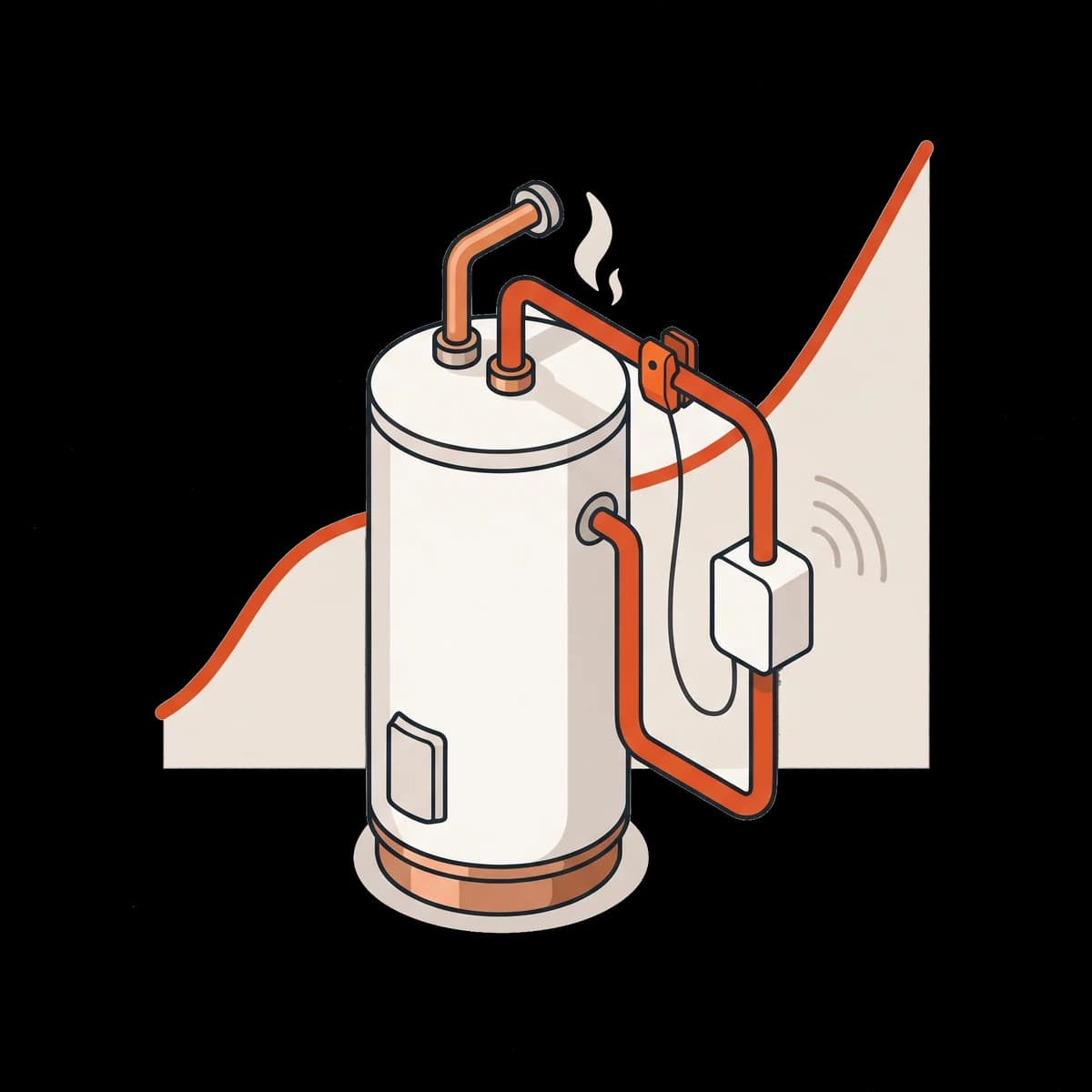
The sensor sees the hot water
The sensor on the hot pipe leaving the water heater (water heater main building), before the first branch, measures every 15 minutes and sees the hot water within that interval. Taps on the same installation together form one flushing round.
- 4
The line is in the logbook
Half an hour after the last tap the round closes. For each tap there is the time, the name and the result; if no hot water came, that is in it too, with an alert.
What you see
Three screens from the app
With made-up data, as it will look for you.
The temperature chart
The course of the day for each sensor. The jump when flushing shows that hot water came out of the installation.
The line in the logbook
Every flush with time, name and result. Nothing can be changed afterwards; a correction is a new line.
The report
Key figures, findings and the results per flushing point, for the period the inspector asks for.
Everything it does
What is in it now
Planning around the school holidays
Your school holidays are periods in the planning. In a holiday the classrooms and changing rooms go into the flushing round every week; after the holiday everything runs as normal.
Flushing without an account
Staff tap with their own phone and the flushing password of the site. Their name is on every flush, and they do not need an account.
Alerts
A temperature outside the norm (after 3 readings in a row) or a flushing round that is not done gives an alert in the app and an email to whoever is responsible on site.
Report with one click
PDF, Excel or CSV over a period of your choice, and a share link for the inspector that works for 24 hours.
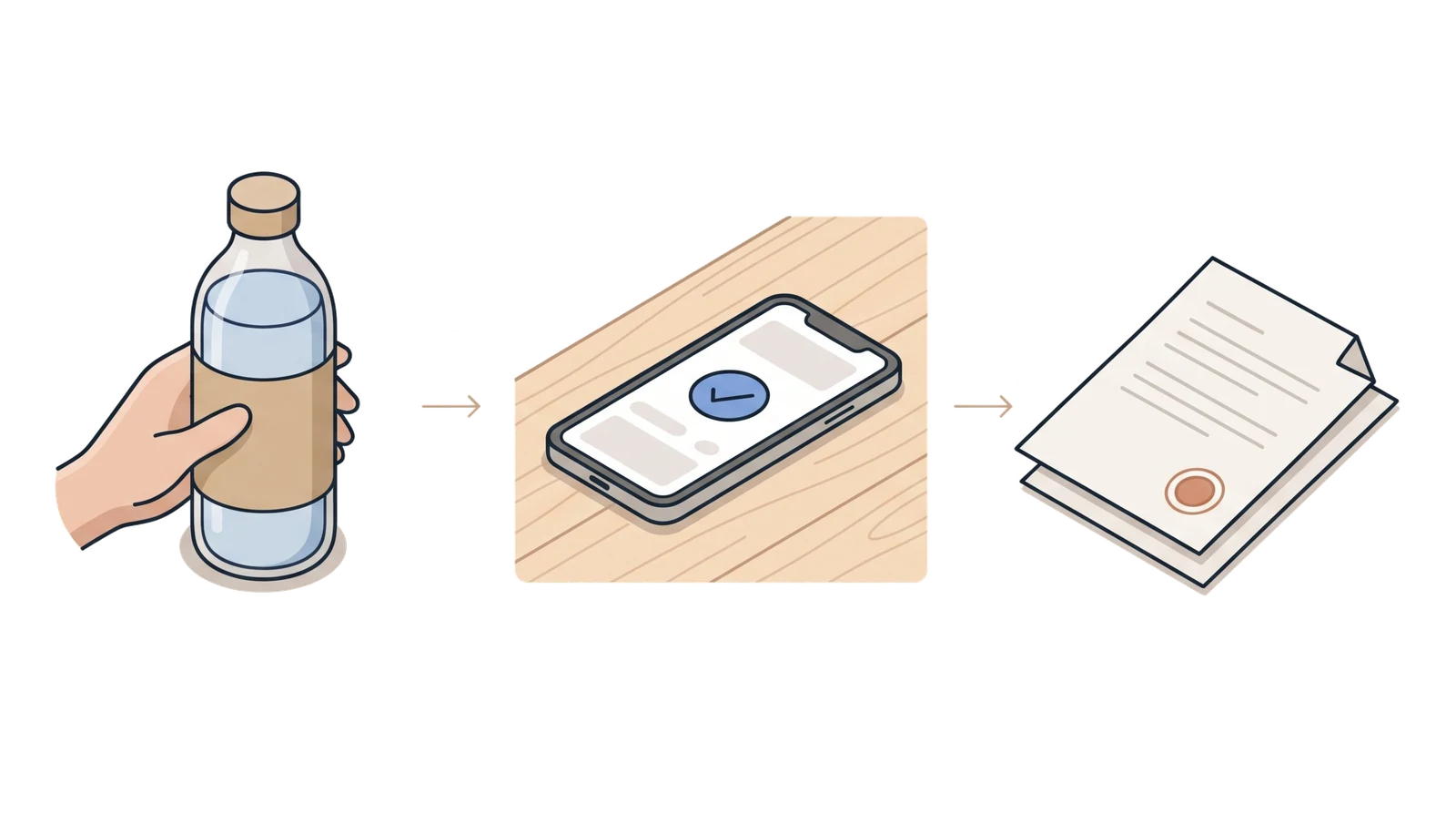
The laboratory still takes the samples
The laboratory results, the risk assessment and the water safety plan go into the same file as the logbook.
Several schools
Each school its own logbook and report, under one account of the board. For a board with more sites we first make a plan together.
Who puts it up
The caretaker, in half an hour
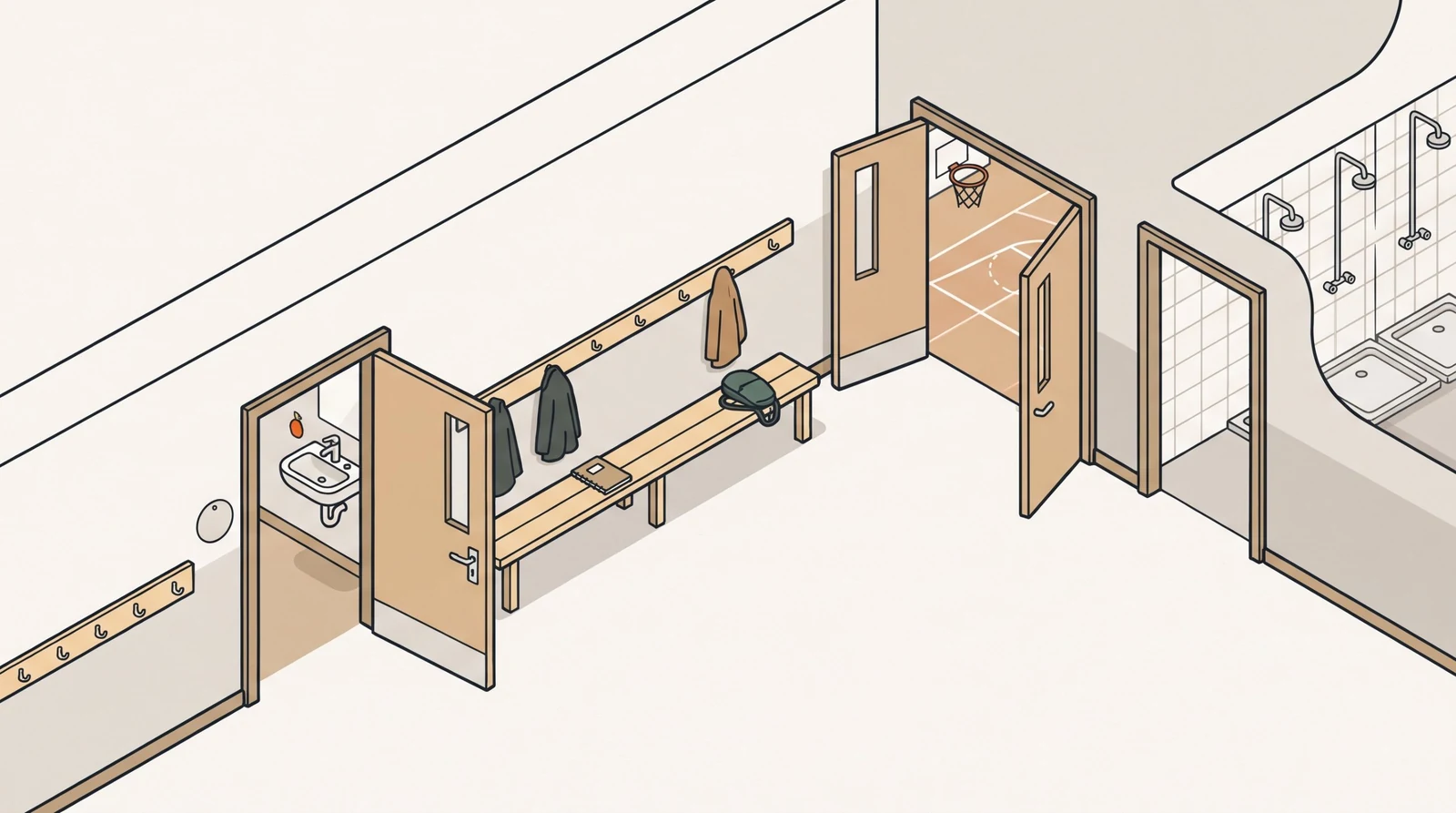
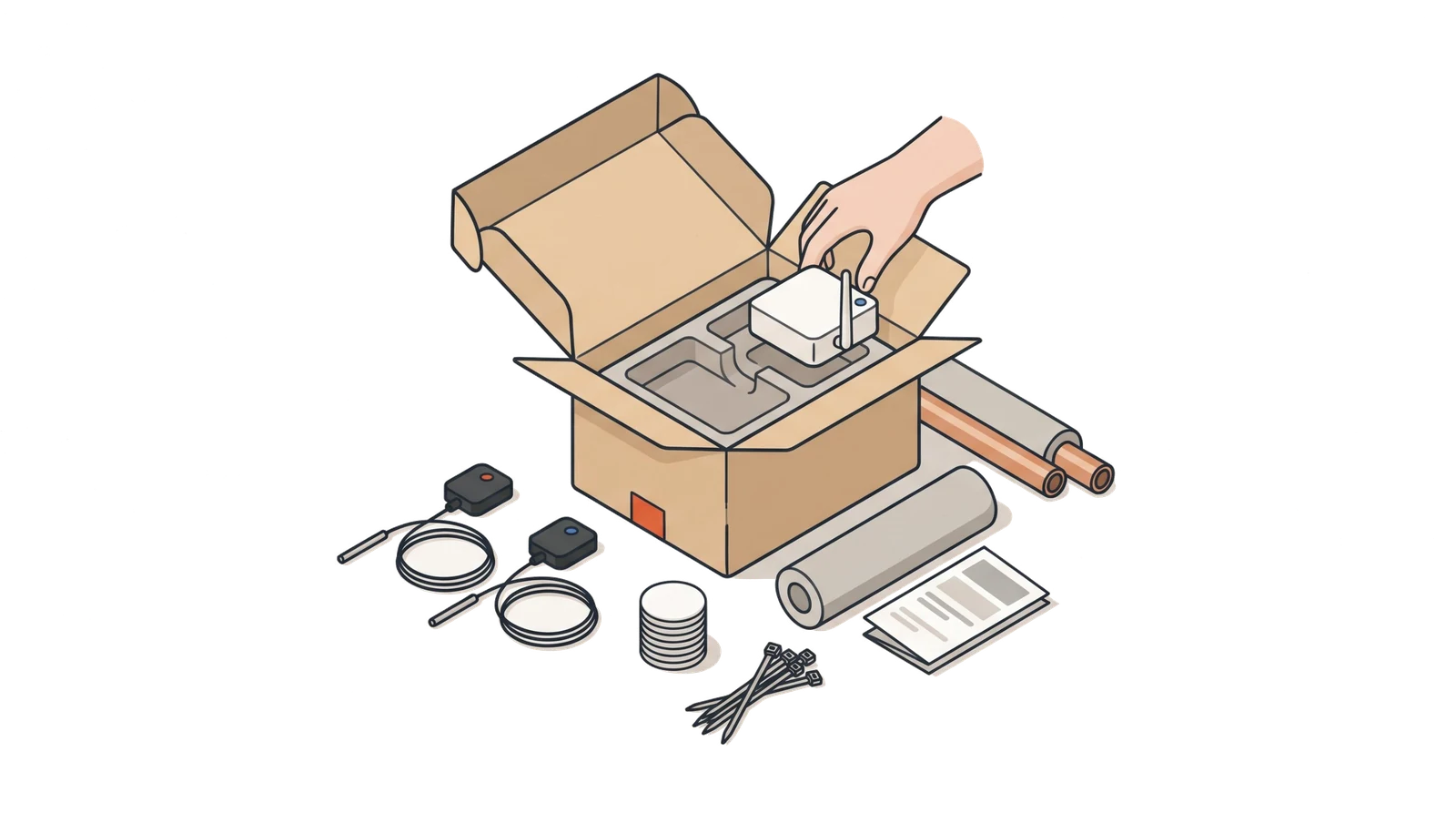
The sensor goes on the hot pipe leaving the central water heater, before the first branch. You plug the gateway in at the office; you stick the tags at the taps in the classrooms and at the showers in the changing rooms.
The laboratory still takes the samples
We record the flushing in between. The laboratory results, the risk assessment and the water safety plan go into the same file.
Price
A kit, then per month
- Kit S, 1 building: €395 one-off and €39 per month.
- Kit M, 2 to 3 buildings: €595 one-off and €59 per month.
- Kit L, 4 buildings: €895 one-off and €89 per month.
- Prefer to rent? Ask us.
All prices exclude VAT. From 5 buildings, a quotation to measure.
Request a pilot or a callSee first how it works at your school?
Ask us for a pilot or a call. The kit size follows the central water heaters.
Contact
Rather talk first?
Leave your details and we will contact you within two working days about the kit that suits your school.